Ready to turn the start of a new school year into something exciting and memorable? DIY back-to-school decor for 2026 offers a creative way to refresh your home, classroom, or party space with colorful, personalized touches. From cheerful signs and playful balloon displays to handmade banners and themed photo areas, these ideas can instantly create a festive atmosphere while celebrating the energy of a fresh academic year.
The best part of DIY decorating is the freedom to make each detail match your style, budget, and available space. Whether you prefer a bright and colorful setup or a simple, modern look, thoughtful handmade decorations can make the back-to-school season feel more special. With a little creativity and a few easy-to-find supplies, you can create a welcoming space that feels fun, organized, and ready for new beginnings.
What are some easy DIY back-to-school decor ideas for 2026?
You can create colorful banners, pencil-themed decorations, school supply centerpieces, and personalized welcome signs. Balloon arches, photo backdrops, and handmade classroom displays are also simple options. These projects add a festive touch without requiring expensive supplies.
DIY Back to School Decor for 2026: Creative Classroom Ideas for a Fresh Learning Space
Create a welcoming classroom with DIY Back to School Decor for 2026 that combines creativity, organization, comfort, and learning. From seasonal reading nooks and colorful learning walls to student identity displays and flexible activity zones, these ideas make every corner feel purposeful. Simple handmade touches can transform an ordinary classroom into a cheerful, inspiring, and well-organized space for the new school year.
1. Patterned Color Grid
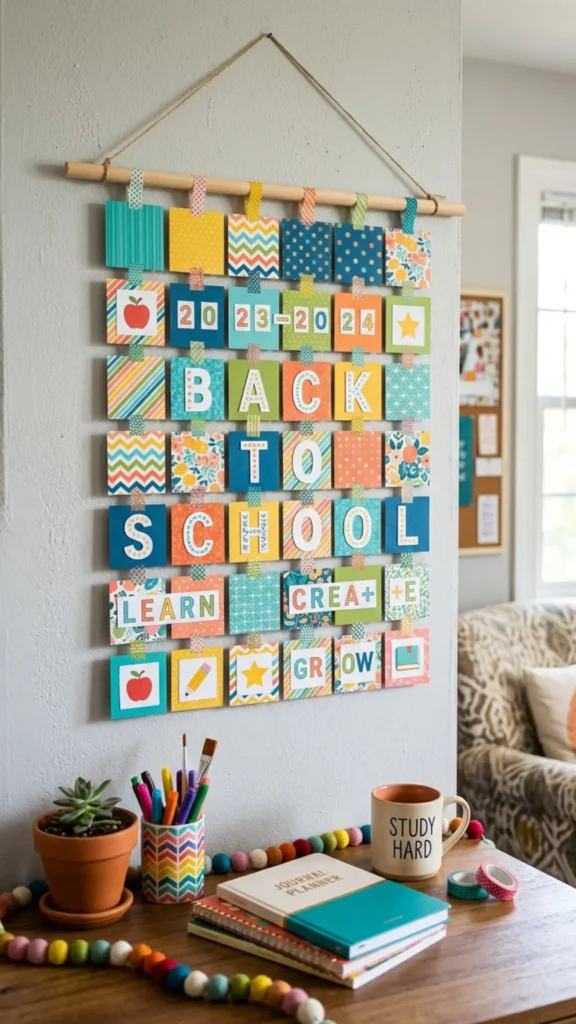
A patterned color grid can instantly bring structure and visual energy to a back-to-school space. Arrange colorful squares, rectangles, or geometric shapes in a neat grid across a wall, choosing shades that complement the room. The organized pattern creates a polished backdrop while giving the space a cheerful, creative character.
For a more personalized finish, incorporate letters, numbers, school-themed icons, or small motivational words into selected sections. Using different patterns within the same color palette keeps the display interesting without making it feel cluttered. It works especially well behind a desk, activity table, or classroom welcome area.
2. Flying Paper Butterflies
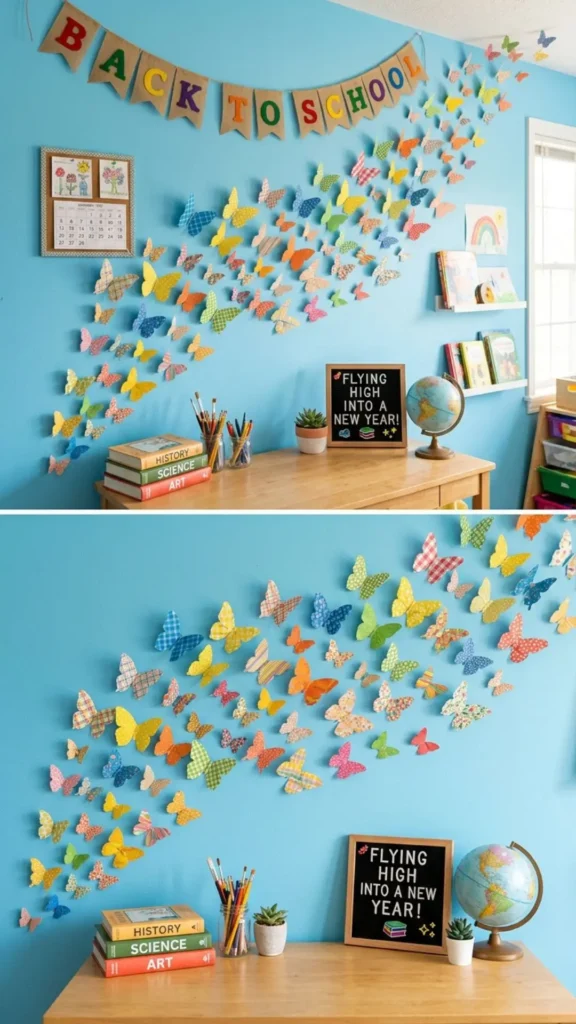
Flying paper butterflies add a playful, imaginative touch to back-to-school decor. Cut butterflies from colorful cardstock or patterned paper and arrange them as though they are gently flying upward across a wall. Varying their sizes and angles creates a natural sense of movement and makes the display feel lively.
This decoration is particularly effective when placed near a reading area, window, or entrance where the butterflies can become a visual focal point. Metallic paper, soft pastels, or bright rainbow shades can completely change the mood. Since the butterflies are lightweight and inexpensive to make, they are also an easy DIY project for refreshing the space each school year.
3. Student Work Spotlight
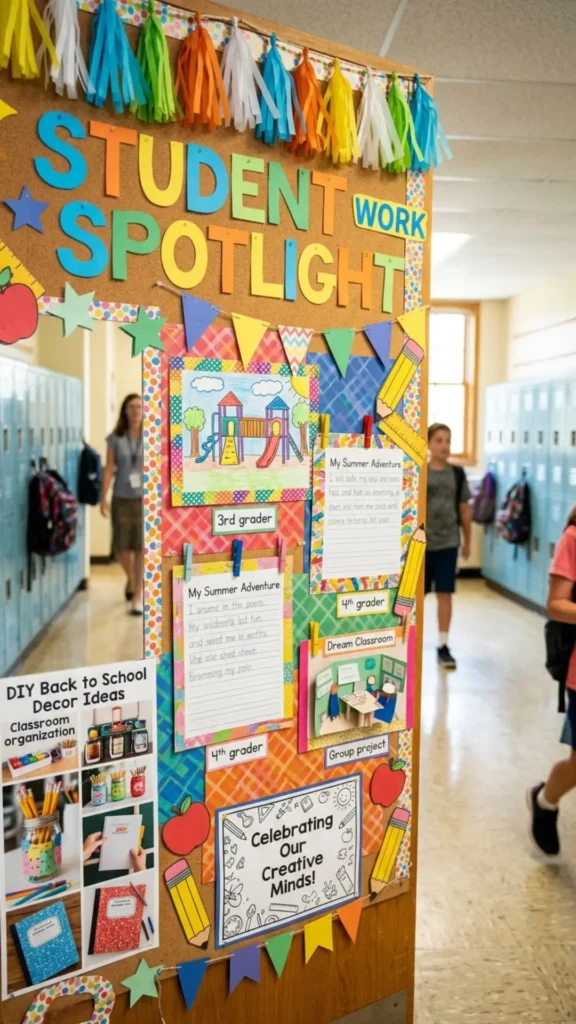
A student work spotlight gives children a meaningful place to display their creativity and accomplishments. Dedicate a section of the wall to drawings, writing projects, crafts, or special assignments, using simple frames, clips, or colorful borders to make each piece stand out. The display can change regularly so different students have an opportunity to be featured.
Beyond decorating the room, this idea creates a stronger sense of ownership and encouragement. Adding small name cards or achievement labels can make the presentation feel more personal while keeping the arrangement organized. It turns everyday student work into an attractive part of the classroom environment.
4. Cozy Reading Corner
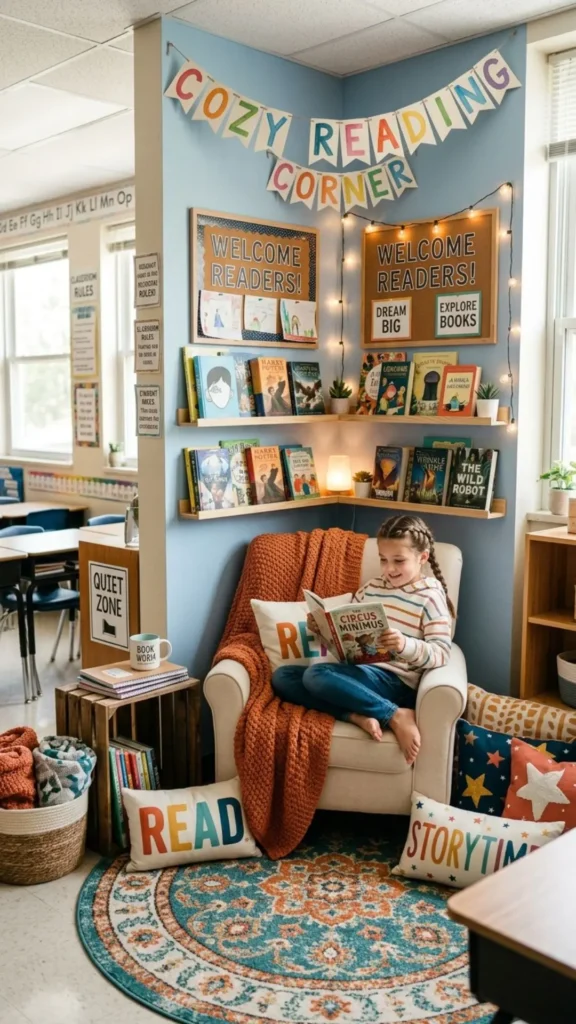
A cozy reading corner can make books feel more inviting by combining comfort with thoughtful decoration. Place a soft rug, floor cushions, beanbags, or a small chair beside an accessible bookshelf to create a dedicated space for quiet reading. A few colorful pillows or book-themed accents can add personality without overwhelming the area.
Keep the overall design calm enough to support concentration and relaxation. A small basket for favorite books, a handmade reading sign, and a few decorative wall elements can complete the setup. This kind of corner encourages students to slow down, explore new stories, and develop a positive connection with reading.
5. Balanced Learning Zones
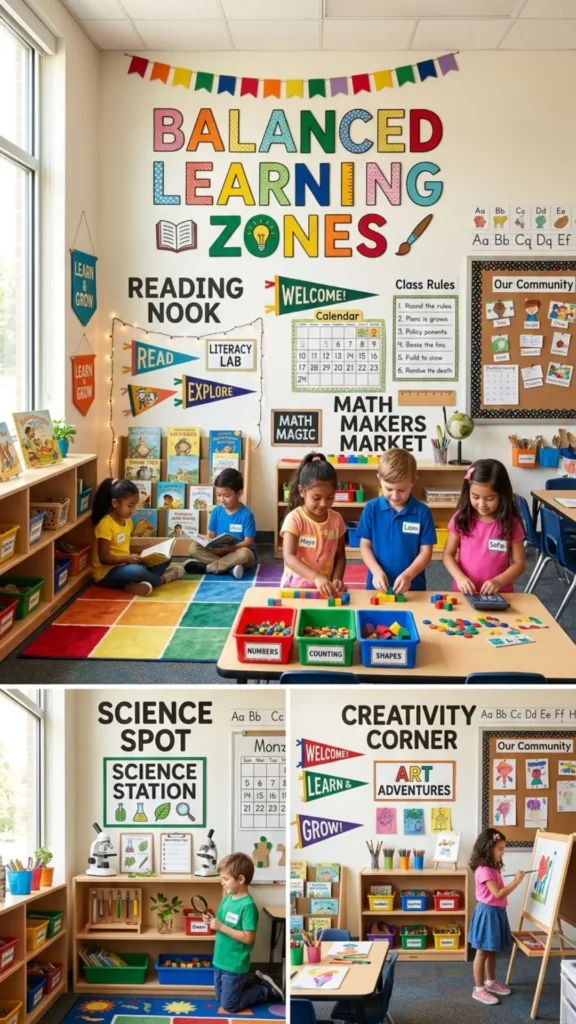
Balanced learning zones help divide a classroom into purposeful areas while keeping the overall decor cohesive. Create clearly defined spaces for reading, creative activities, group work, independent study, or hands-on learning using rugs, signs, furniture arrangements, and subtle color differences. Each zone can have its own identity while still following the room’s main theme.
The goal is to make the classroom feel organized rather than crowded. Simple visual cues, labeled storage, and carefully positioned furniture can help students understand how each area should be used. A well-planned layout also makes transitions between activities smoother and gives the room a more functional, welcoming appearance.
6. Colorful Reading Circle
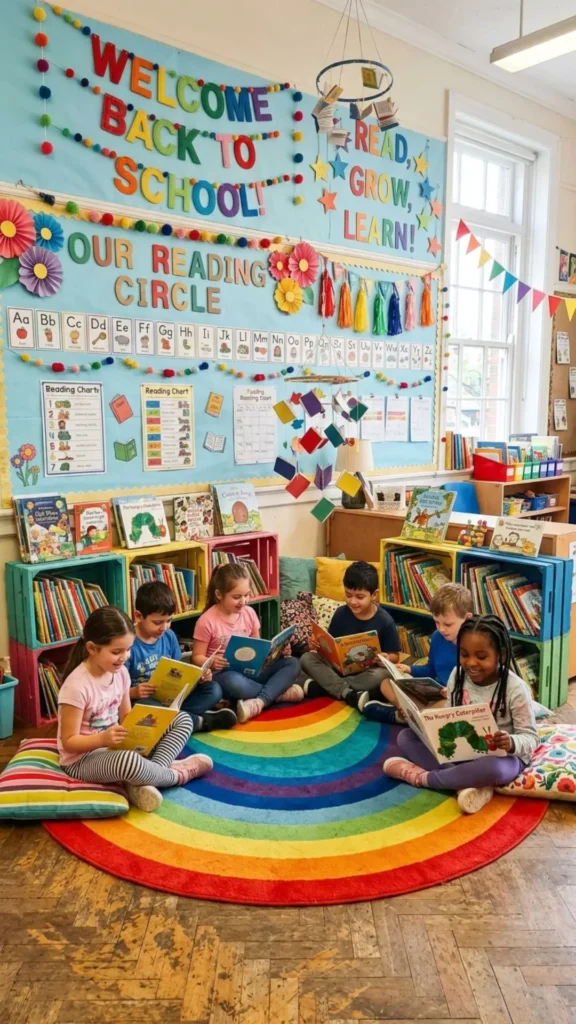
A colorful reading circle can turn group story time into one of the most inviting parts of the classroom. Arrange bright floor cushions, small mats, or low seating in a circle and surround the area with cheerful book-themed decorations. A colorful rug can serve as the foundation, while a nearby basket keeps favorite stories within easy reach.
To make the space feel more special, add a simple sign such as “Reading Circle” along with paper stars, books, or alphabet accents. Keep the seating arrangement open and comfortable so students can easily gather together. The result is a friendly setting designed for storytelling, discussion, and shared reading experiences.
7. Warm Welcome Wall
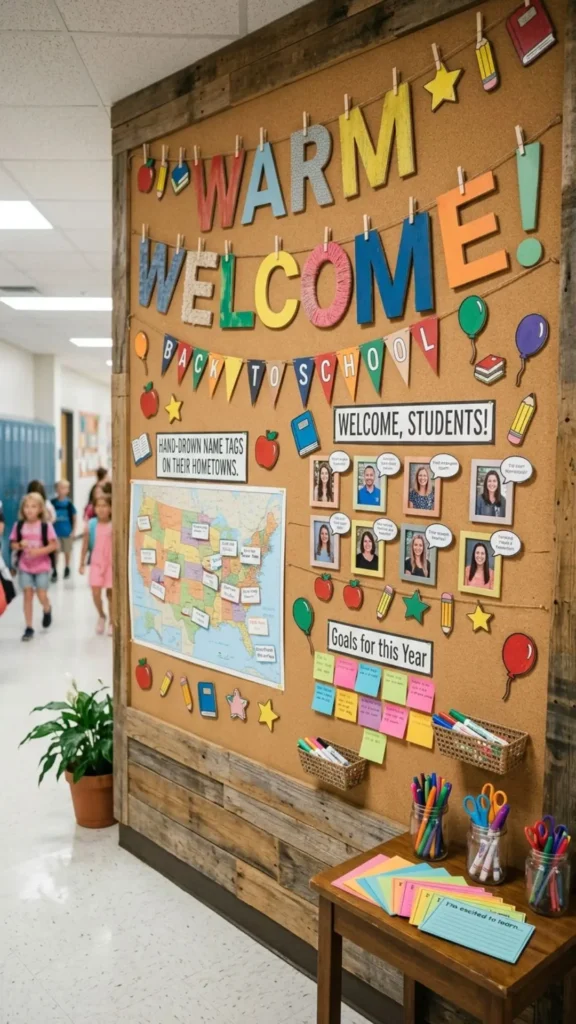
A warm welcome wall creates an inviting first impression as soon as students enter the room. Use a large handmade greeting as the centerpiece and surround it with colorful borders, classroom symbols, names, or encouraging phrases. Choosing materials with different textures, such as paper cutouts and fabric accents, can give the wall additional depth.
Personal touches make this display even more memorable. Consider adding a section where students can introduce themselves, share a favorite thing, or leave a positive message during the first week. Instead of being purely decorative, the wall becomes a welcoming feature that helps establish a friendly classroom atmosphere.
8. Soft Light Focus
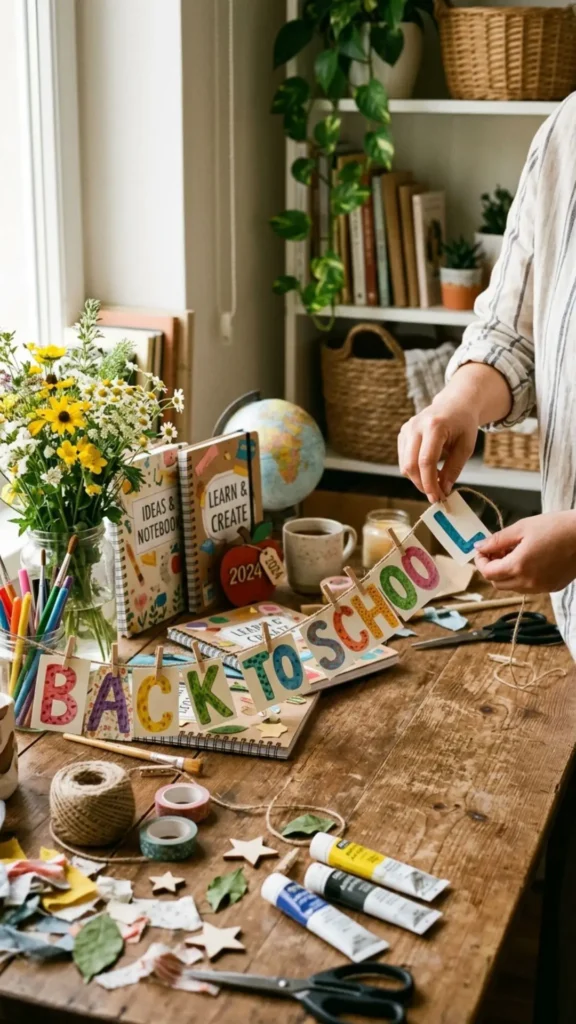
Soft lighting can completely change the mood of a classroom or study area, particularly when used alongside brighter traditional lighting. Warm-toned lamps, battery-operated fairy lights, or decorative lanterns can create a gentler atmosphere in selected corners. Positioning these lights around reading or quiet work areas can make them feel comfortable without distracting from the rest of the room.
Use lighting as an accent rather than covering the entire space with decorative illumination. A small lamp beside a reading chair or subtle lights around a bulletin board can provide just enough warmth to enhance the decor. This approach gives the room a calm, thoughtfully designed appearance while maintaining its practical learning environment.
9. Rainbow Window Draping
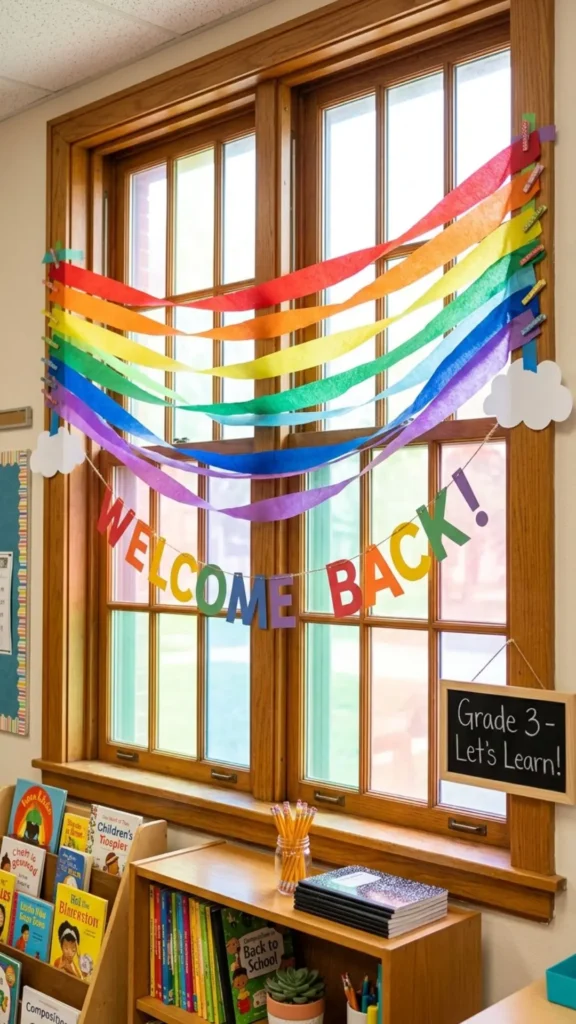
Rainbow window draping brings color and movement to an otherwise overlooked part of the classroom. Hang ribbons, strips of lightweight fabric, or colorful paper streamers vertically around the window to create a flowing rainbow effect. Arranging the colors in a clear sequence gives the display a clean, coordinated appearance.
For a softer look, combine pastel shades with sheer materials that allow natural light to remain the focus. Bright primary colors can create a more energetic atmosphere, making this idea suitable for playful learning spaces. Since the draping can be adjusted or replaced easily, it offers a flexible way to refresh the room throughout the school year.
10. Seasonal Reading Nook
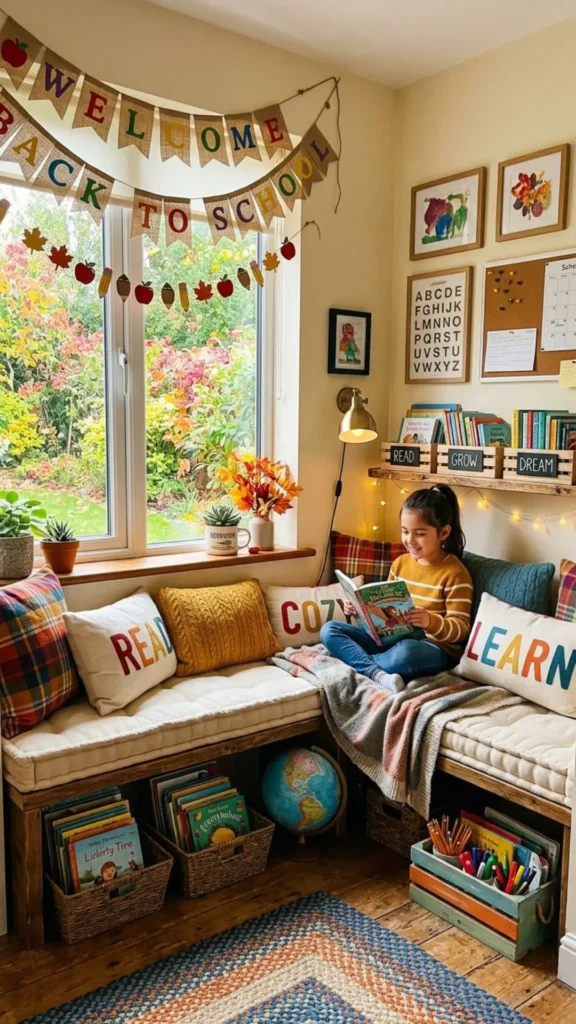
A seasonal reading nook can give the classroom a fresh and inviting atmosphere while encouraging students to spend more time with books. Refresh the area with seasonal colors, themed cushions, small decorative accents, and a rotating selection of age-appropriate stories. Keeping the design connected to the current season makes the space feel lively throughout the school year.
You can also introduce simple handmade details such as paper leaves, snowflakes, flowers, or themed book labels depending on the time of year. A small basket for featured books and a comfortable seating arrangement can make the nook both attractive and practical. The changing display gives students something new to discover while keeping reading at the heart of the space.
11. Writing Station Zone
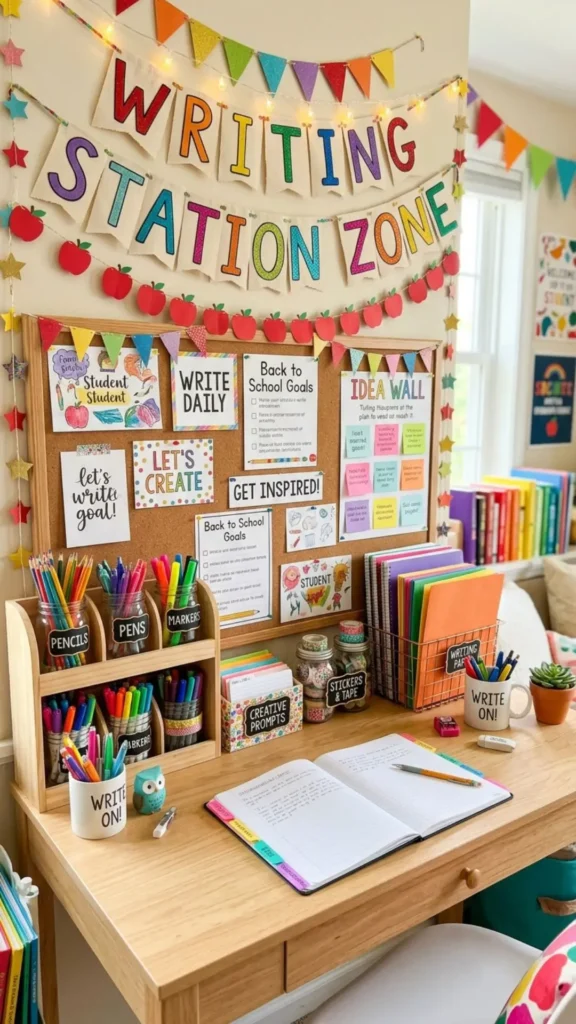
A dedicated writing station gives students a focused place where they can practice creative writing, journaling, and classroom assignments. Set up a small table with notebooks, pencils, colored pens, writing prompts, and neatly arranged supplies so everything is easy to reach. A simple sign can clearly identify the area and make it feel like a purposeful part of the classroom.
To make the station more inspiring, decorate the surrounding wall with vocabulary words, encouraging phrases, story starters, or examples of student writing. Keep the setup organized rather than overly decorative so students can concentrate comfortably. This thoughtful combination of function and visual interest can turn an ordinary workspace into a motivating creative zone.
12. Vertical Supply Tower
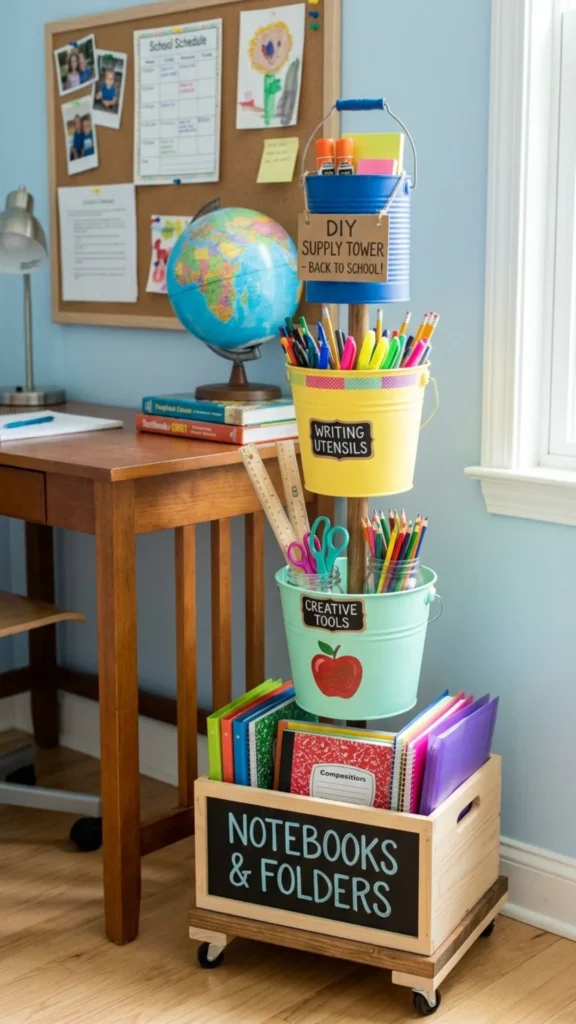
A vertical supply tower is a smart decorating solution when classroom floor space is limited. Use a tall shelving unit, stackable containers, or wall-mounted organizers to store pencils, markers, paper, craft materials, and other frequently used items. Labeling each section makes the system easier for students to understand and helps maintain order.
Instead of allowing supplies to spread across desks and counters, the vertical arrangement keeps everything concentrated in one accessible location. Choose containers in coordinated colors to make the tower look intentional rather than purely functional. With the right organization, even a compact storage area can become an attractive feature of the classroom.
13. Open Play Zones
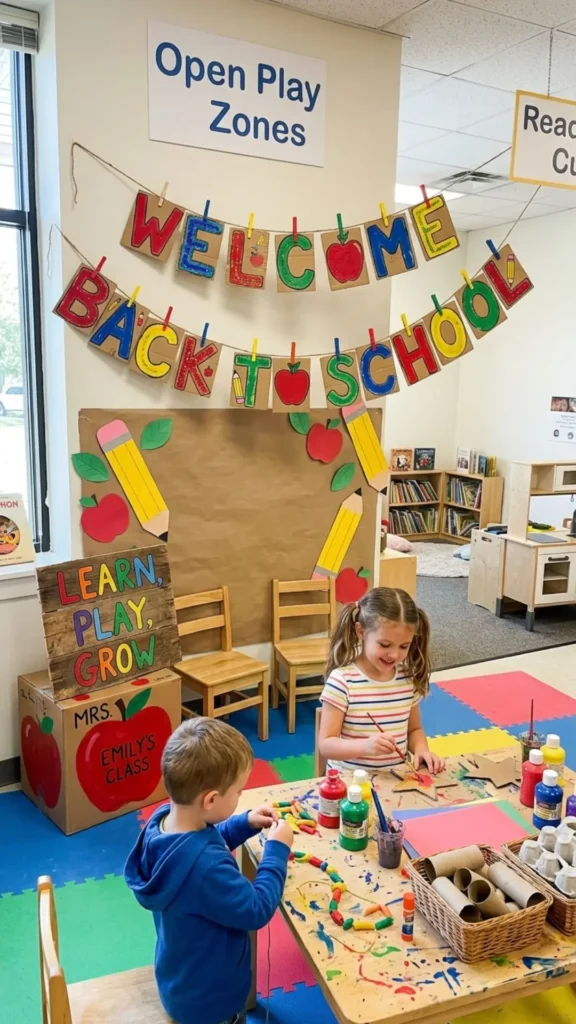
Open play zones provide children with flexible areas where they can explore, create, and interact without feeling restricted by heavy furniture. Leave enough clear floor space for activities such as building blocks, imaginative play, movement games, or collaborative projects. Soft rugs and lightweight storage baskets can help define the area without making it feel enclosed.
The beauty of an open zone is its adaptability. One day it might become a construction area, while another day it can support group activities or creative play. Keeping furniture minimal and movable allows the space to change according to students’ needs while maintaining a comfortable and uncluttered classroom layout.
14. Natural Classroom Flow
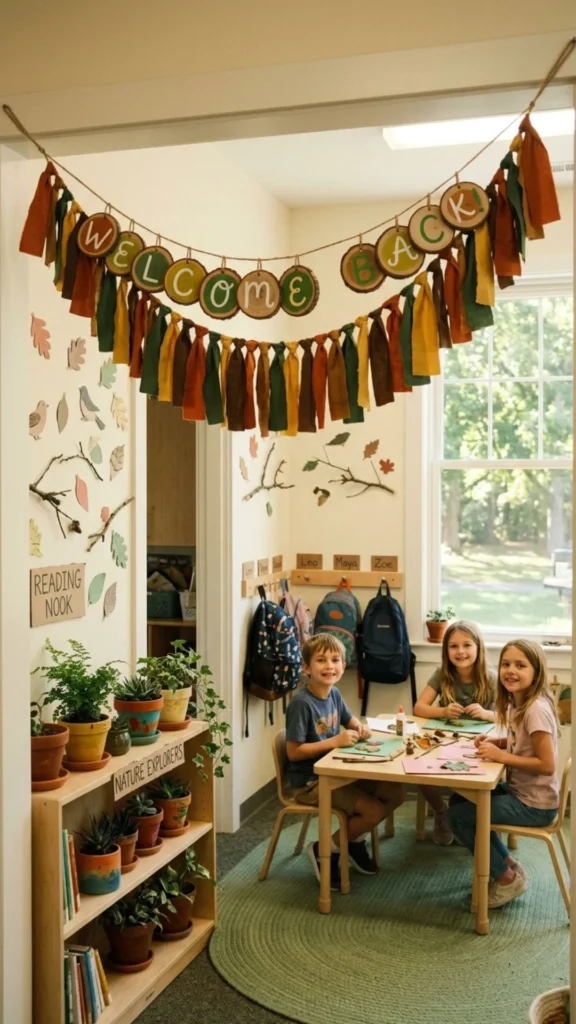
Natural classroom flow begins with arranging furniture and activity areas so students can move comfortably from one part of the room to another. Keep major walkways clear and position frequently used resources where they are easy to access. Desks, shelves, reading spaces, and activity tables should work together rather than creating unnecessary obstacles.
A thoughtful layout can make daily routines feel smoother and reduce visual clutter at the same time. Consider how students enter the room, collect supplies, transition between activities, and return to their seats. When each area has a logical place, the classroom feels more spacious, organized, and welcoming from the moment students walk in.
15. Statement Wall Art
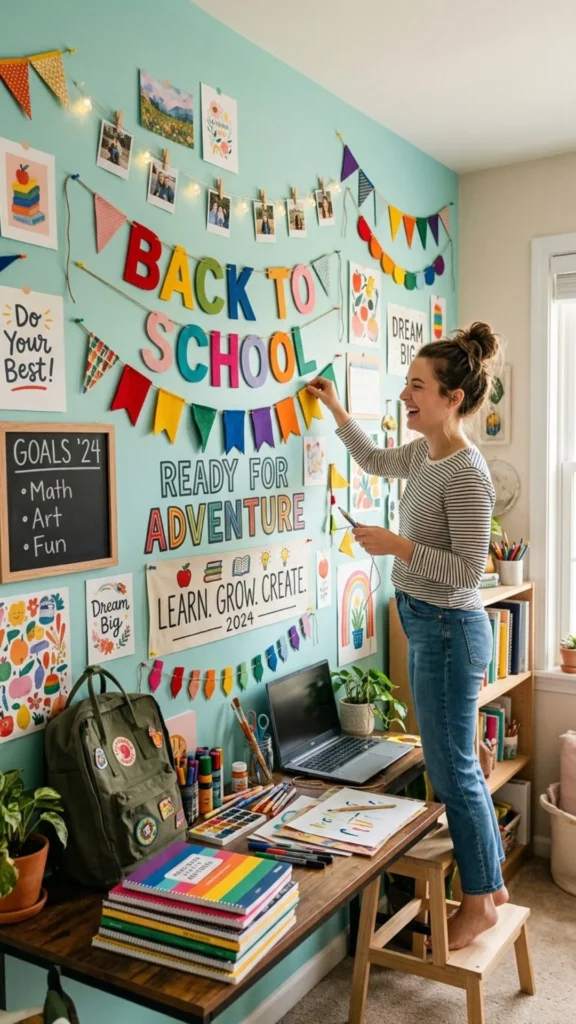
Statement wall art can give a classroom a strong visual identity without requiring every wall to be heavily decorated. Choose one large piece featuring an inspiring phrase, colorful illustration, educational theme, or playful school-related design. A bold focal point can immediately draw attention and make the room feel thoughtfully decorated.
For a DIY approach, create oversized letters from cardstock, paint a large collaborative mural, or combine several handmade pieces into one cohesive display. Keep the surrounding wall relatively simple so the artwork remains the main attraction. This balance creates a polished look while giving the classroom plenty of personality.
16. Colorful Learning Wall
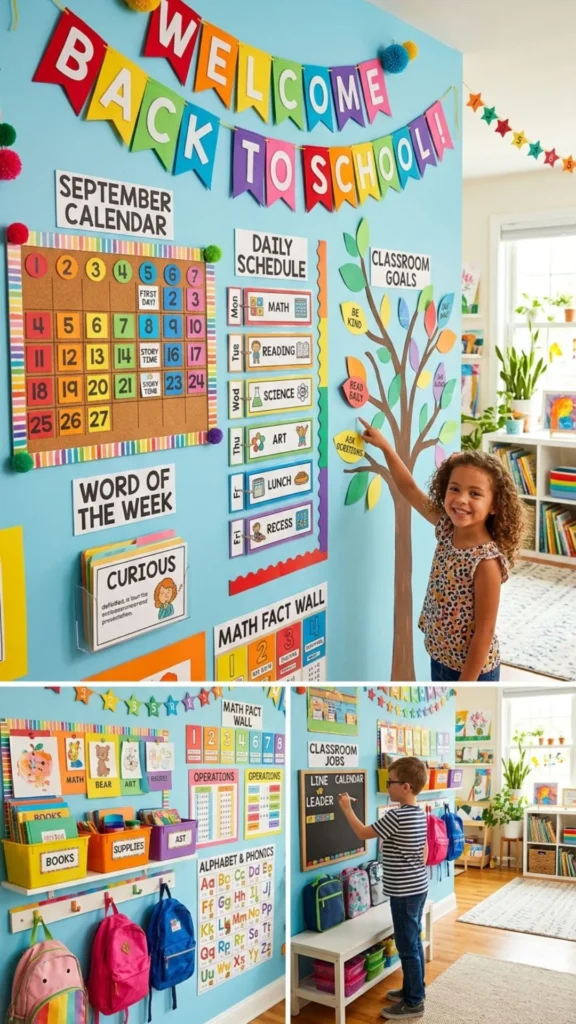
A colorful learning wall combines useful educational material with cheerful visual design. Use sections for letters, numbers, vocabulary, classroom reminders, diagrams, or subject-specific information, separating each area with bright borders or distinct colors. The result can function as both an educational resource and an eye-catching decorative feature.
Avoid filling every available space with information; leave enough breathing room between sections so students can easily focus on individual elements. Adding movable cards or interchangeable learning pieces also allows the wall to evolve with classroom lessons. This keeps the display relevant while making everyday learning more visually engaging.
17. Student Identity Wall
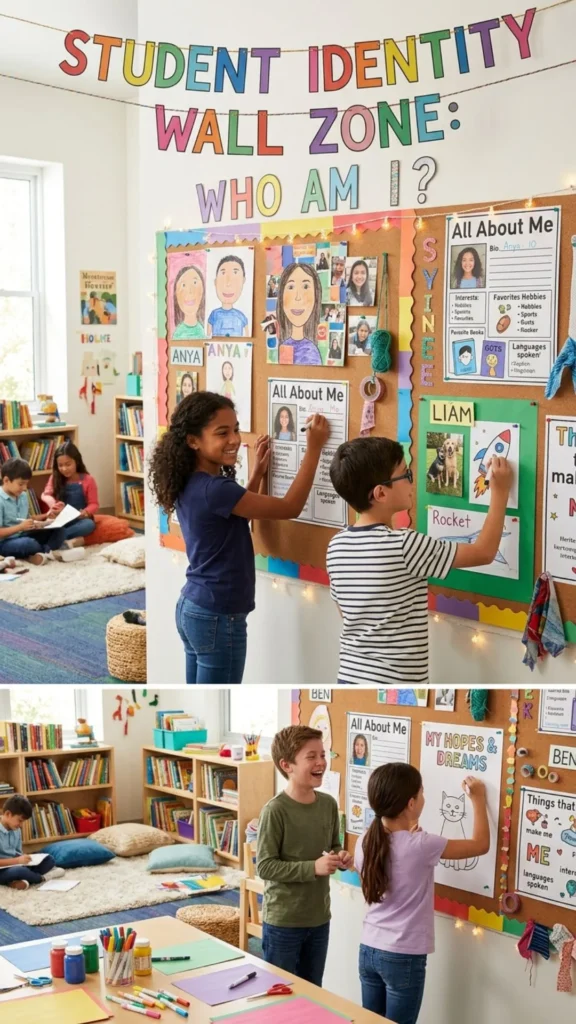
A student identity wall gives every child an opportunity to contribute something personal to the classroom. Display student names alongside favorite colors, hobbies, drawings, interests, or short introductions using cards, photographs, or handmade artwork. Seeing their own contributions represented can help students feel that the classroom belongs to them as well.
The display can also encourage classmates to learn more about one another in a natural way. Consider updating or expanding the wall as students discover new interests throughout the year. With a thoughtful layout and consistent design, personal information can become part of a warm, welcoming classroom display without making the space feel crowded.
18. Rotating Quote Strip
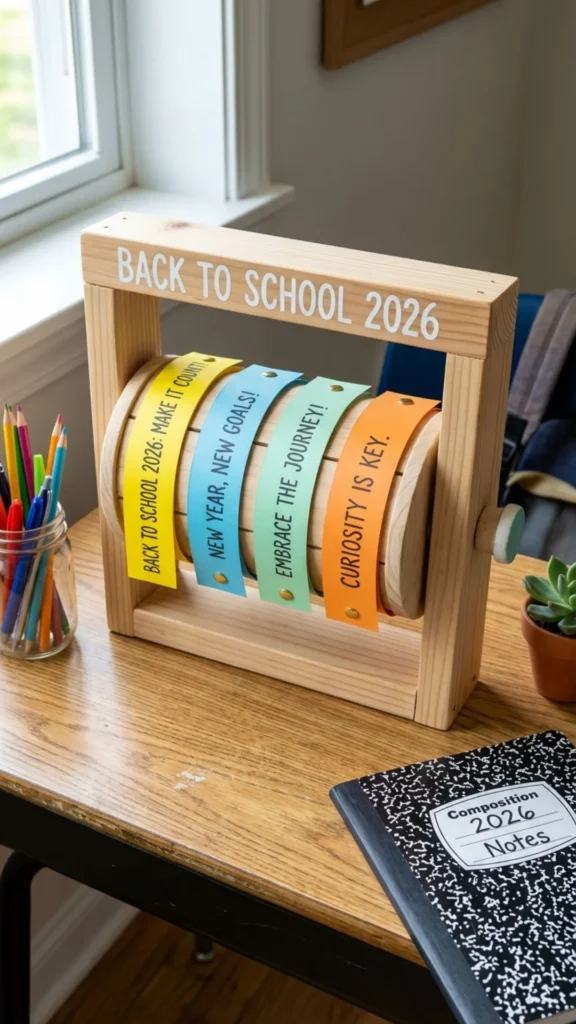
A rotating quote strip is a simple way to keep classroom inspiration fresh without redesigning an entire wall. Create a long horizontal display where motivational messages, reading quotes, learning reminders, or student-written sayings can be changed regularly. Using colorful cards or interchangeable letters makes the update process quick and visually appealing.
Choose messages that suit the current classroom focus rather than relying only on generic motivational phrases. A quote about curiosity can complement a science unit, while a message about imagination can work beautifully during a creative writing project. Changing the strip throughout the year gives students a small but meaningful source of encouragement each time they see it.
How can I make DIY back-to-school decor look stylish?
Choose a consistent color palette and combine simple patterns with personalized details. Use matching banners, signs, balloons, and table decorations to create a coordinated look. Adding handmade elements can make the setup feel more unique and creative.
Stylish Tips for DIY Back to School Decor for 2026
Create a Consistent Classroom Color Story
Choose two to four complementary shades for wall art, banners, storage, and decorative accents to create a cohesive and polished classroom look.
Make Every Decoration Serve a Purpose
Combine creativity with functionality by using decorative displays for learning, organization, student work, or classroom activities without overcrowding the space.
Add Personal Touches Students Will Love
Include student names, artwork, interests, and encouraging messages to make the classroom feel more welcoming, meaningful, and connected to the children.
Keep the Classroom Layout Open and Clear
Arrange furniture and decorations thoughtfully so important walkways and activity areas remain uncluttered, making the room easier and more comfortable to navigate.
Refresh Small Details With the Seasons
Rotate cushions, wall accents, reading materials, and handmade decorations throughout the year to keep the classroom environment fresh and visually interesting.
Turn Empty Walls Into Useful Features
Use vertical space for learning charts, supply organizers, student displays, and creative artwork to maximize the classroom without taking up valuable floor space.
Conclusion
DIY back-to-school decor is a simple yet meaningful way to welcome the 2026 school year with personality and excitement. Handmade banners, creative centerpieces, colorful accents, and personalized displays can transform ordinary spaces into cheerful environments that encourage enthusiasm for learning and new experiences.
Rather than focusing on expensive decorations, concentrate on details that reflect the excitement of a fresh start. A few thoughtful DIY touches can create a memorable setting for children, families, teachers, or classmates and make the first days of school feel even more special. With creativity leading the way, your 2026 back-to-school celebration can be both stylish and unforgettable.
FAQs
How can I decorate a classroom on a budget?
Use affordable materials such as cardstock, paper, ribbons, recycled containers, and existing classroom supplies for creative decorations.
How can DIY decor make a classroom more engaging?
Personalized displays, colorful learning zones, and interactive decorations can make the classroom feel more inviting and inspiring.
What colors work best for back-to-school classroom decor?
Bright primary colors, cheerful pastels, or a coordinated mix of complementary shades can create a lively and balanced classroom.
How can I keep classroom decorations from looking cluttered?
Choose a consistent theme, leave some wall space open, and focus on purposeful decorations rather than filling every available area.
Can DIY back-to-school decor be changed throughout the year?
Yes, seasonal displays, rotating quotes, student artwork, and changing learning materials make it easy to refresh the classroom regularly.