A beautifully designed shrub border can transform an ordinary garden into a lush, inviting landscape filled with texture, color, and natural elegance. Whether you prefer neatly structured greenery, colorful flowering shrubs, or relaxed cottage-inspired planting, the right shrub border ideas can bring depth, definition, and year-round visual interest to your outdoor space. Beyond their decorative appeal, shrubs also provide privacy, soften hard landscaping, and create a natural transition between lawns, pathways, and garden beds.
From timeless evergreen arrangements to vibrant seasonal displays and modern minimalist planting schemes, shrub borders offer endless opportunities to personalize your garden. Choosing the right combination of heights, foliage colors, textures, and flowering varieties helps create a balanced design that looks attractive throughout the seasons. With thoughtful placement and a little creativity, even a simple garden edge can become a stunning landscape feature that feels professionally designed and beautifully maintained.
What are the best shrub border ideas for a modern garden?
Modern gardens look stunning with layered evergreen shrubs, ornamental grasses, and compact flowering varieties. Combining clean planting lines with contrasting foliage colors creates a sophisticated, low-maintenance border that feels fresh and contemporary.
Shrub Border Ideas for a Stunning, Lush and Beautifully Designed Garden
Shrub Border Ideas can transform any outdoor space into a visually appealing landscape filled with natural beauty, structure, and year-round charm. From elegant evergreen arrangements and colorful flowering displays to modern minimalist edges and privacy-enhancing greenery, the right shrub combinations can make every garden feel more polished and inviting. Whether you have a spacious backyard or a small front garden, these inspiring designs offer creative ways to add texture, define outdoor spaces, and create a beautiful landscape that reflects your personal style.
1. Layered Evergreen Shrub Borders for a Lush, Year-Round Garden
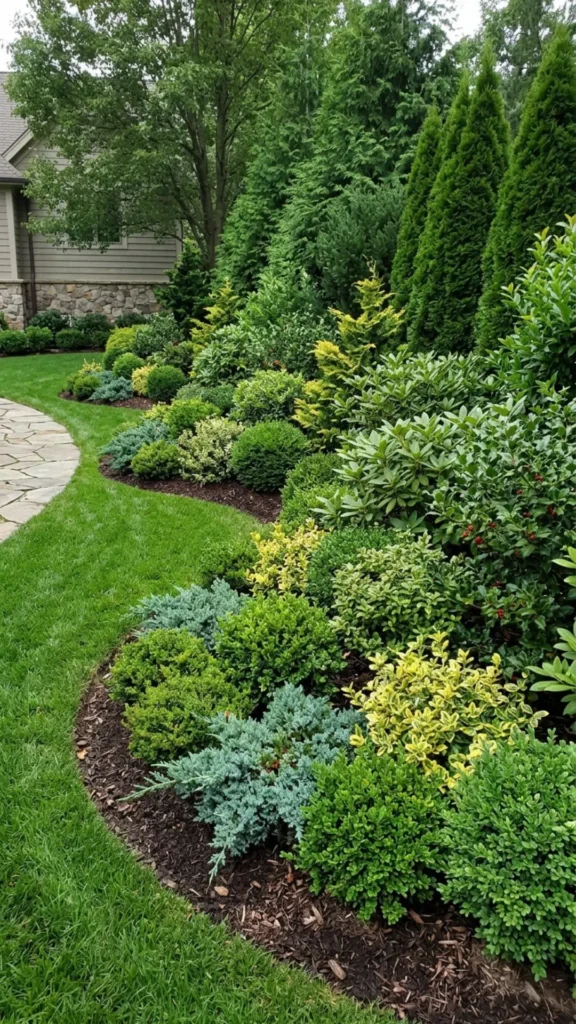
Layered evergreen shrub borders are an excellent choice for creating a garden that remains attractive even when seasonal flowers disappear. By arranging shrubs in different heights, you can establish a rich, dimensional landscape that looks full and beautifully organized throughout the year. Taller evergreens such as arborvitae or upright junipers provide a backdrop, while medium-sized shrubs and compact varieties fill the foreground with contrasting shapes and foliage.
The secret to making this arrangement visually interesting is choosing plants with different leaf textures, growth habits, and shades of green. Rounded shrubs, narrow upright forms, and soft cascading foliage create natural movement without making the border feel overcrowded. This approach works particularly well along fences, property boundaries, and expansive lawns where consistent greenery can make the entire outdoor space feel polished and thoughtfully designed.
2. Curved Shrub Borders with Soft, Natural Landscape Edges
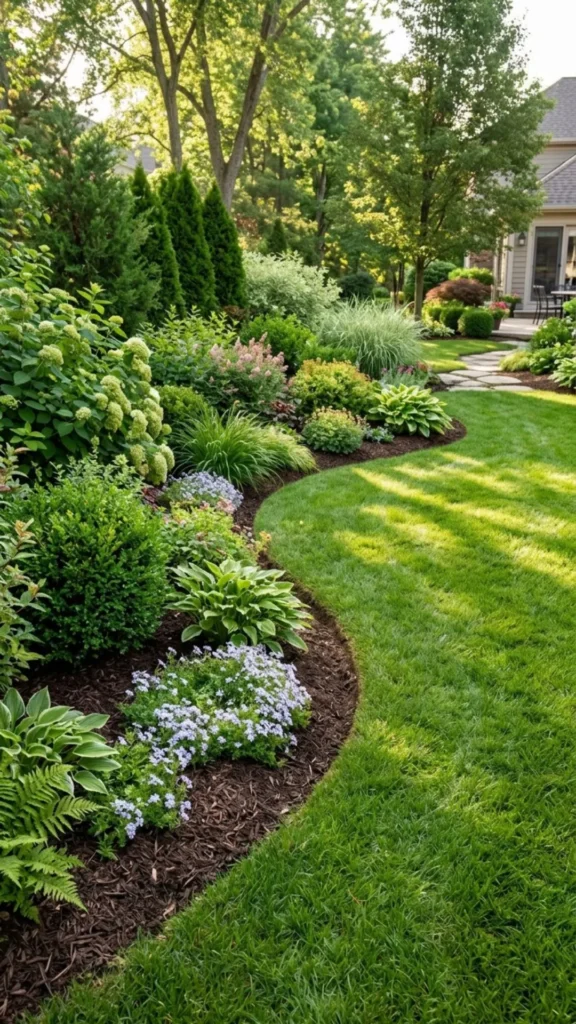
Curved shrub borders introduce a graceful, organic appearance that makes gardens feel more welcoming and naturally connected to their surroundings. Instead of following rigid straight lines, gently sweeping edges create movement through the landscape and soften the appearance of lawns, pathways, and patios. These flowing shapes are especially appealing in informal gardens where a relaxed, natural atmosphere is more desirable than strict symmetry.
To achieve an attractive result, mark the border with broad, flowing curves rather than several small bends that can make the design appear unnecessarily complicated. Plant compact shrubs along the front edge and introduce taller varieties toward the back, following the same gentle outline. A curved border filled with flowering shrubs, ornamental foliage, and subtle groundcover can become a beautiful focal point while making the garden feel more spacious and visually balanced.
3. Flowering Shrub Borders Bursting with Seasonal Color
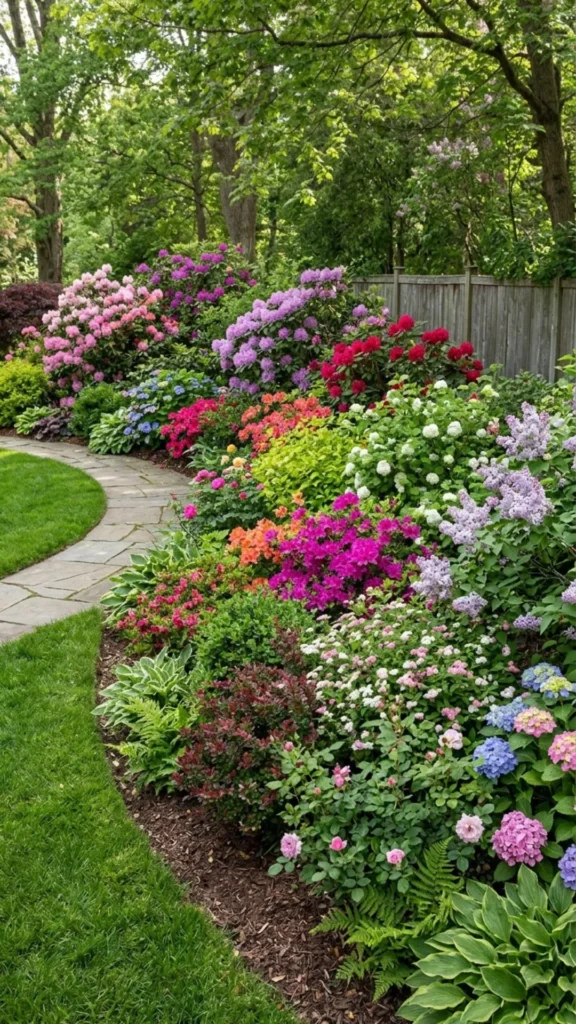
Flowering shrub borders bring a vibrant personality to outdoor spaces by introducing changing colors, delicate blooms, and beautiful seasonal displays. Hydrangeas, azaleas, weigela, and flowering spirea offer different bloom shapes and color palettes, allowing homeowners to create everything from soft pastel arrangements to bold, cheerful planting combinations. These borders can make an otherwise simple lawn or garden boundary feel decorative and full of life.
For a more sophisticated appearance, choose shrubs that flower at different times rather than relying on a single variety with one short blooming period. Early-season blossoms can transition into summer flowers, followed by shrubs with attractive autumn foliage or ornamental berries. Combining flowering plants with evergreen companions also helps maintain visual structure between bloom cycles, ensuring the border remains appealing even when individual shrubs are not flowering.
4. Modern Minimalist Shrub Borders with Clean Architectural Lines
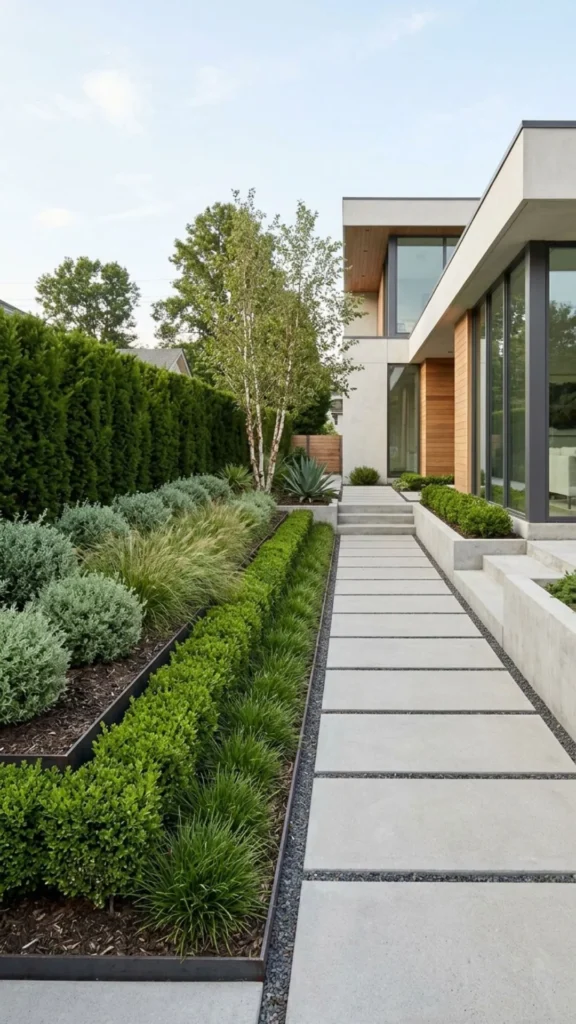
Modern minimalist shrub borders are perfect for homeowners who appreciate simplicity, carefully defined spaces, and a refined landscaping aesthetic. These designs typically feature a limited selection of shrubs arranged in clean lines, repeating patterns, or geometric shapes. Compact evergreens, clipped ornamental shrubs, and architectural plants create a neat appearance that complements contemporary homes, smooth paving, and modern outdoor furniture.
Rather than filling every available space with plants, minimalist borders benefit from thoughtful spacing and intentional repetition. A row of evenly positioned shrubs alongside a gravel pathway or concrete edge can look remarkably elegant without requiring complicated planting combinations. Restrained greenery, subtle foliage contrasts, and well-maintained shapes allow the landscape to feel calm, organized, and effortlessly stylish.
5. Cottage Garden Shrub Borders with Romantic Floral Charm

Cottage-inspired shrub borders capture the enchanting beauty of traditional gardens through relaxed planting arrangements, delicate flowers, and charming combinations of foliage. These borders often feature flowering shrubs such as roses, hydrangeas, lilacs, and viburnums mixed with perennial blooms and soft ornamental grasses. The overall effect feels welcoming, slightly informal, and beautifully connected to nature rather than carefully controlled.
A lovely cottage border should look abundant without becoming difficult to navigate or maintain. Position larger shrubs toward the back and allow smaller flowering plants to weave naturally around the front edges. Soft pinks, creamy whites, lavender shades, and fresh greenery create a romantic color palette, while staggered flowering periods keep the garden lively across multiple seasons. This style is especially attractive beside country homes, garden paths, and charming outdoor seating areas.
6. Low-Growing Shrub Borders for Elegant Lawn Edging
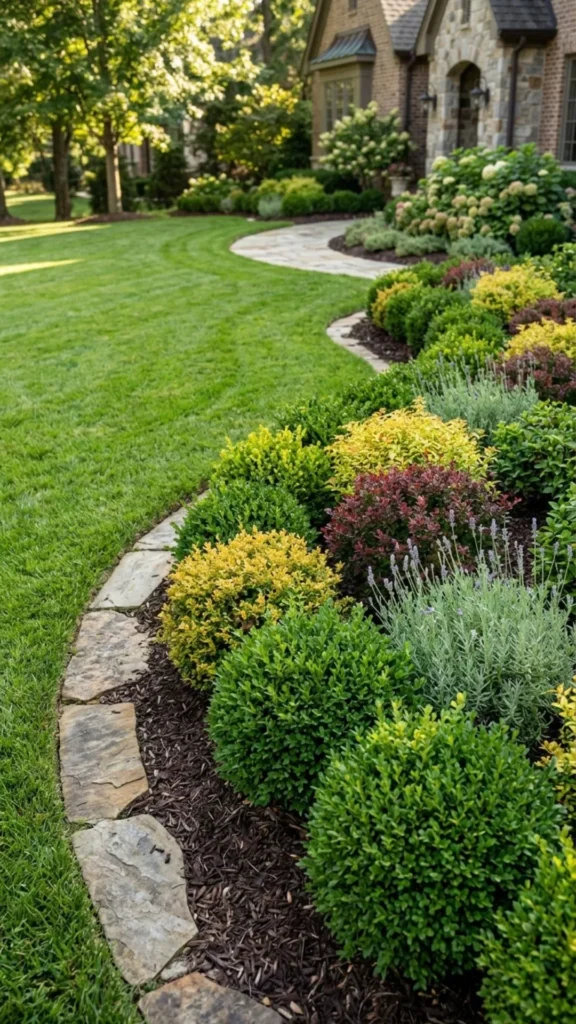
Low-growing shrub borders offer a beautifully defined lawn edge while keeping the surrounding landscape open, bright, and easy to appreciate. Compact varieties such as dwarf boxwood, small junipers, and low-growing euonymus can create a neat transition between grass and planting beds without blocking garden views. Their modest height makes them particularly useful around front lawns, walkways, and smaller outdoor spaces where taller shrubs might feel overwhelming.
For an attractive finish, choose shrubs with naturally compact growth or varieties that respond well to occasional pruning. Plant them in a consistent rhythm to establish a clean visual boundary, allowing enough space for mature growth rather than placing them too closely together. A carefully maintained low border gives the lawn a professional appearance and makes the entire garden feel more intentional without demanding an elaborate landscaping design.
7. Mixed Foliage Shrub Borders with Beautiful Texture and Contrast
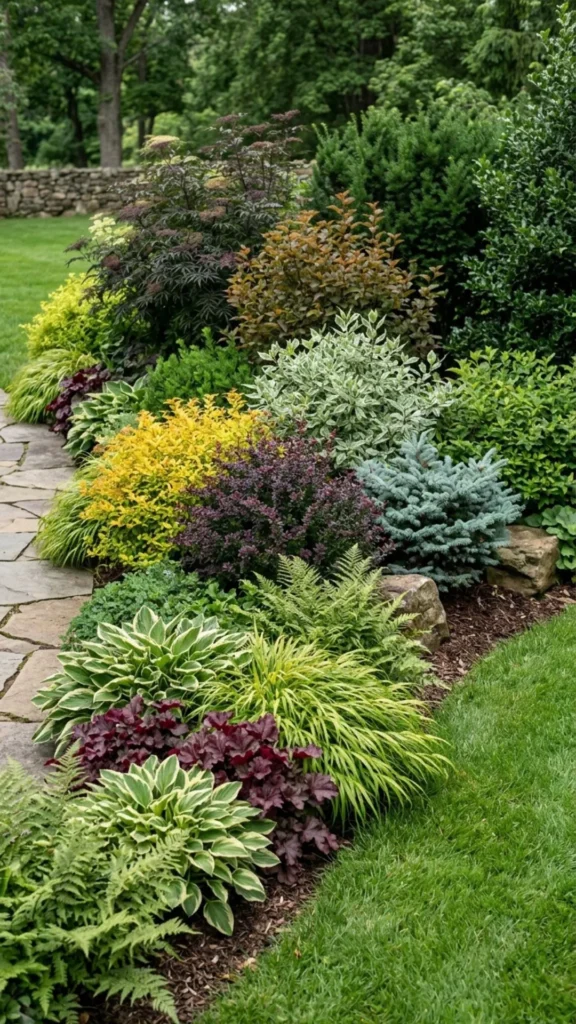
Mixed foliage shrub borders demonstrate how beautiful a garden can become even without relying heavily on flowers. Different leaf shapes, colors, and textures create an engaging visual arrangement that remains interesting throughout the growing season. Deep green evergreens, silvery foliage, golden leaves, and burgundy-toned shrubs can be combined to produce a layered landscape with remarkable depth and character.
The most successful combinations balance contrasting foliage with a sense of harmony. For example, a golden-leaved shrub can stand out beautifully beside a dark green evergreen, while fine-textured foliage adds softness around broader leaves. Repeating selected colors in different sections of the border helps prevent the arrangement from feeling random. This approach is especially useful for gardens where long-lasting structure and visual interest are more important than continuous flowering.
8. Privacy-Focused Shrub Borders for a Secluded Garden Retreat
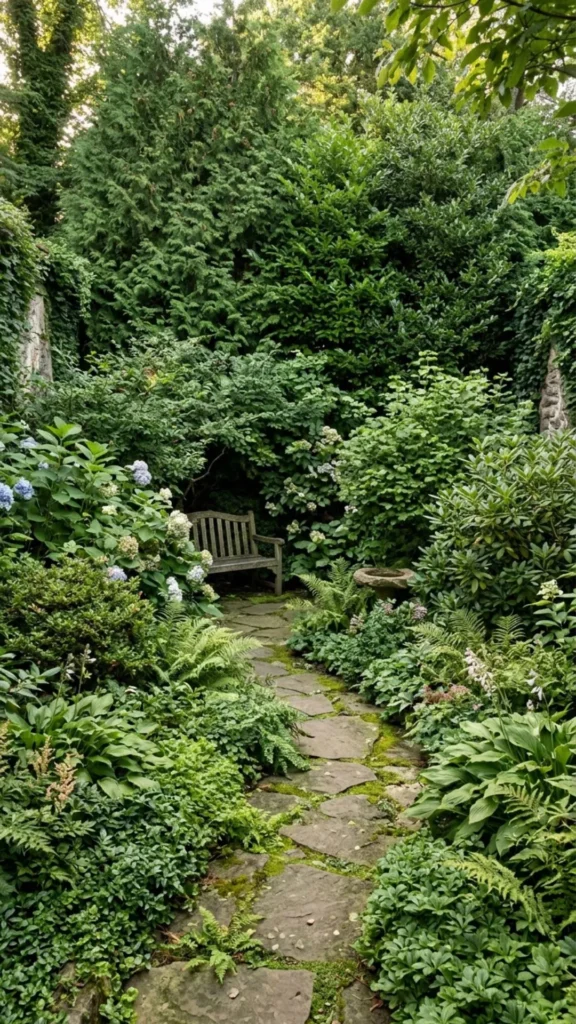
Privacy-focused shrub borders can turn an exposed backyard into a peaceful retreat by creating natural screening around outdoor living areas. Taller evergreen shrubs, dense hedging plants, and carefully positioned medium-sized varieties help soften unwanted views while making patios, seating corners, and garden boundaries feel more intimate. Unlike a solid fence, living greenery adds texture, movement, and a softer visual connection to the surrounding landscape.
When planning a privacy border, consider the mature height, width, and growth speed of each shrub before planting. A combination of taller screening plants and shorter foreground shrubs creates a more attractive result than a single uninterrupted row of greenery. Leave sufficient room for maintenance and airflow, and choose species suited to your local climate and sunlight conditions. With thoughtful placement, these borders can provide both practical screening and a beautiful garden backdrop.
9. Hydrangea Shrub Borders for a Soft, Colorful Garden Display

Hydrangea shrub borders are admired for their generous flower clusters, lush foliage, and beautifully soft appearance. Their blooms can create an impressive display in shades of white, pink, blue, lavender, and green, depending on the variety. Positioned along garden paths, fences, or lawn edges, hydrangeas bring a romantic quality that makes even a simple landscape feel more decorative and inviting.
To create a balanced hydrangea border, consider combining different flower colors or using one consistent shade for a more coordinated appearance. Their large blooms look especially striking against evergreen shrubs or darker foliage, which provides contrast and helps the flowers stand out. Most hydrangeas appreciate suitable moisture and well-prepared soil, so selecting the right variety for your growing conditions is essential for maintaining healthy plants and abundant flowering.
10. Boxwood Borders with Timeless Formal Garden Elegance
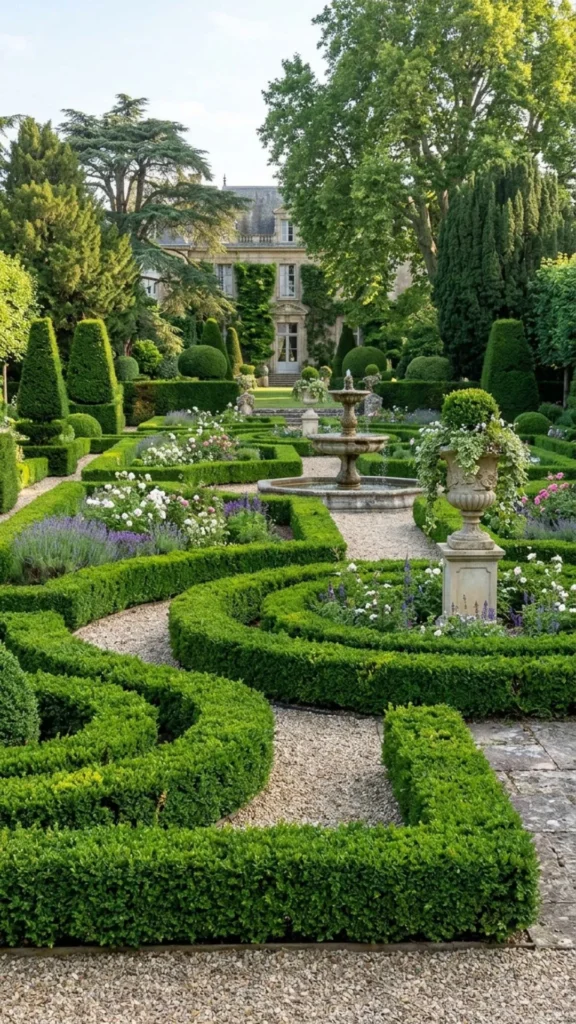
Boxwood borders remain a classic landscaping favorite because their dense foliage and adaptable growth make them ideal for creating elegant garden outlines. Their naturally compact leaves respond well to shaping, allowing gardeners to establish rounded edges, neat rectangular arrangements, or symmetrical planting designs. Whether surrounding a flower bed or framing a pathway, boxwood introduces a sense of order that feels timeless rather than overly trendy.
Formal boxwood borders look particularly beautiful when paired with colorful seasonal flowers, decorative gravel, or neatly maintained lawns. A low clipped hedge can define the edge of a garden bed, while slightly taller arrangements create attractive structure around courtyards and entryways. However, good drainage, suitable growing conditions, and regular monitoring for common boxwood pests and diseases help preserve their appearance and long-term health.
11. Drought-Tolerant Shrub Borders for Stylish Low-Water Landscaping
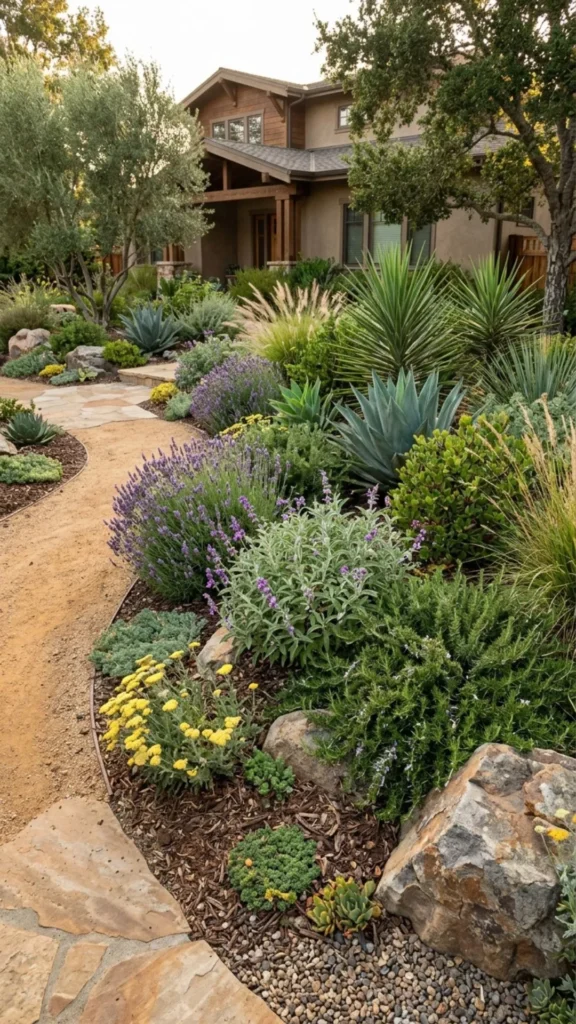
Drought-tolerant shrub borders are an attractive solution for gardens where water conservation and reduced maintenance are important priorities. Plants such as lavender, rosemary, certain junipers, and suitable native shrubs can create beautiful landscapes while requiring less supplemental watering once established. Their distinctive foliage, aromatic qualities, and natural growth patterns make them especially appealing for Mediterranean-inspired or contemporary garden designs.
A successful low-water border begins with choosing shrubs adapted to the local climate and soil conditions rather than simply selecting plants labeled drought-resistant. Group varieties with similar watering requirements, improve drainage where necessary, and consider decorative gravel or organic mulch to help manage soil moisture. The result can be a beautifully textured garden border that feels relaxed and sophisticated while supporting more responsible water use.
12. Front Yard Shrub Borders with Instant Curb Appeal

Front yard shrub borders can dramatically improve a home’s exterior by creating a welcoming transition between the building and the surrounding landscape. A thoughtfully arranged combination of evergreen shrubs, flowering varieties, and compact ornamental plants adds depth around foundations while highlighting architectural features. Even a modest planting bed beside the entrance can make the property appear more established, attractive, and carefully maintained.
For a cohesive front yard design, choose shrubs that complement the home’s exterior colors and proportions. Taller plants can anchor the corners of the house, while lower shrubs keep windows and entryways visually open. Repeating a few plant varieties across different sections of the landscape creates continuity, making the entire frontage look professionally planned rather than like a collection of unrelated garden beds.
13. Fragrant Shrub Borders for a Beautifully Scented Outdoor Space

Fragrant shrub borders offer something beyond visual beauty by filling the garden with pleasant natural aromas throughout different seasons. Lilacs, gardenias, mock orange, daphne, and fragrant roses are popular choices for creating scented planting arrangements, although their flowering periods and growing requirements vary. Positioned near a walkway, patio, or outdoor seating area, these shrubs allow their fragrance to become part of the everyday garden experience.
The placement of fragrant plants makes a considerable difference to how enjoyable the border feels. Keeping strongly scented varieties near frequently used paths or seating areas allows their aroma to be appreciated more easily, while mixing them with evergreen shrubs maintains a beautiful structure between flowering periods. A carefully selected fragrance garden can create an inviting atmosphere that feels peaceful, personal, and wonderfully connected to nature.
14. Wildlife-Friendly Shrub Borders Filled with Natural Garden Beauty

Wildlife-friendly shrub borders help transform ordinary planting beds into valuable habitats for birds, pollinators, and other beneficial garden visitors. Flowering shrubs provide nectar and pollen, while berry-producing varieties offer seasonal food for birds. Dense branches also create useful shelter and nesting opportunities, making the border an attractive feature for both homeowners and local wildlife.
To encourage biodiversity, choose a mixture of locally suitable native shrubs, flowering plants, and species that produce berries or seeds. Different flowering periods help support pollinators across the growing season, while avoiding unnecessary pesticide use protects beneficial insects. Allowing some natural variation in the border can make it feel more authentic and lively, creating a garden that supports wildlife without sacrificing its decorative appeal.
15. Raised Garden Bed Shrub Borders for a Structured Landscape
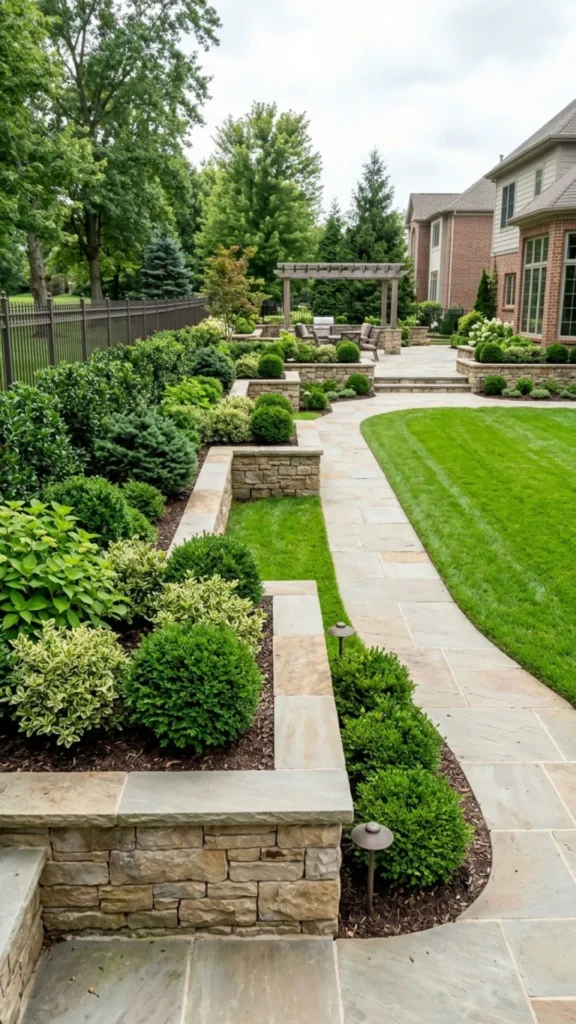
Raised garden bed shrub borders introduce height and definition into landscapes that might otherwise appear flat or visually unstructured. Stone edging, brick retaining walls, timber frames, or contemporary concrete structures can elevate planting areas and create a clear distinction between lawns, pathways, and decorative beds. The additional height also allows shrubs and foliage plants to become more noticeable from different viewing angles.
When designing raised shrub borders, select plants according to the available soil depth, drainage, and exposure to sunlight. Compact shrubs, ornamental grasses, and carefully arranged flowering varieties work particularly well in these elevated spaces. Repeating materials used elsewhere in the garden, such as matching stone edging or paving, creates a cohesive design that feels architectural and intentionally coordinated.
16. Tropical-Inspired Shrub Borders with Bold, Lush Greenery

Tropical-inspired shrub borders create an impressive landscape through oversized leaves, rich greenery, dramatic silhouettes, and layered planting. Suitable tropical plants or climate-adapted foliage shrubs can introduce a resort-like atmosphere that feels vibrant and luxurious. Depending on the region, options may include hibiscus, crotons, dwarf palms, and bold-leaved ornamental plants that bring striking color and texture to garden edges.
The beauty of this style lies in its combination of contrasting plant forms rather than simply filling the border with greenery. Large leaves look particularly appealing beside finer foliage, while colorful shrubs provide accents that draw attention without overwhelming the arrangement. In colder climates, hardy tropical-look plants or container-grown tender specimens can recreate a similar effect while accommodating seasonal temperature changes. These lush garden settings can also provide beautiful inspiration for Summer Garden Party Wedding Ideas, especially when creating vibrant outdoor celebration spaces.
17. Curated Mixed Shrub Borders with Designer-Look Plant Combinations

Curated mixed shrub borders bring together carefully selected plants to create the polished appearance of a professionally designed landscape. Rather than planting shrubs randomly, this approach focuses on balancing foliage colors, mature sizes, flowering periods, and natural shapes. A combination of evergreen structure, ornamental flowering shrubs, and contrasting foliage can make a garden border feel rich, sophisticated, and visually connected.
One of the most effective techniques is repeating a few standout shrubs throughout the planting while introducing smaller groups of complementary varieties between them. This repetition creates rhythm, whereas contrasting textures and occasional flowering accents prevent the arrangement from becoming monotonous. By considering how each plant will look at maturity, homeowners can create a designer-inspired border that feels intentional, naturally beautiful, and suitable for long-term enjoyment.
Which shrubs are best for creating a beautiful year-round garden border?
Evergreen shrubs like boxwood, dwarf juniper, and holly provide consistent structure throughout the year. Adding hydrangeas, lavender, or seasonal flowering shrubs introduces color, fragrance, and texture for a more dynamic landscape.
Stylish Tips for Creating Beautiful Shrub Borders
1. Combine Different Shrub Heights: Layer tall, medium, and low-growing shrubs to create depth and a naturally balanced garden border.
2. Play with Foliage Colors: Mix deep green, golden, silver, and burgundy leaves for an attractive display that remains interesting beyond flowering seasons.
3. Choose Plants for Every Season: Combine early bloomers, summer-flowering shrubs, and evergreen varieties to maintain year-round garden appeal.
4. Follow Your Garden’s Natural Shape: Use gentle curves and flowing planting arrangements to create softer, more inviting landscape edges.
5. Prioritize Low-Maintenance Varieties: Select shrubs suited to your climate, soil, and sunlight conditions to reduce ongoing pruning and watering requirements.
6. Add Decorative Mulch and Edging: Finish your shrub borders with natural mulch, stone edging, or gravel to create a clean and professionally landscaped appearance.
Common Mistakes to Avoid When Designing Shrub Borders
1. Planting Shrubs Too Closely: Overcrowding restricts airflow, creates competition for nutrients, and makes mature plants difficult to maintain.
2. Ignoring Mature Plant Sizes: Choosing shrubs without considering their eventual height and width can result in blocked pathways and an overcrowded landscape.
3. Mixing Incompatible Plant Needs: Combining shrubs with different sunlight, soil, and watering requirements can make long-term garden care unnecessarily difficult.
4. Relying on Only One Plant Variety: Using a single type of shrub throughout the border can create a repetitive appearance with limited seasonal interest.
5. Neglecting Proper Soil Preparation: Planting in compacted or poorly drained soil can affect root development and prevent shrubs from establishing successfully.
6. Over-Pruning Shrubs: Cutting plants too frequently or at the wrong time can damage their natural shape and reduce flowering in certain varieties.
How can I make a small garden look bigger with shrub border ideas?
Choose compact shrubs, maintain curved planting edges, and use different plant heights to create visual depth. Keeping borders relatively narrow and incorporating lighter foliage can make a small garden feel more spacious, balanced, and inviting.
Conclusion
Creating a beautiful shrub border is all about combining the right plants, proportions, and textures to achieve a landscape that feels cohesive and visually appealing. Whether you embrace layered greenery, flowering accents, architectural shrubs, or naturalistic planting, each design choice contributes to a garden that feels more complete, welcoming, and full of character. The most successful borders balance beauty with practicality, making them enjoyable without demanding constant maintenance.
Ultimately, a thoughtfully planted shrub border can become one of the most rewarding features of your outdoor space. Experiment with contrasting foliage, seasonal blooms, and different planting heights to develop a design that reflects your personal style. With carefully selected shrubs and consistent care, your garden can enjoy lasting structure, natural beauty, and an elegant appearance throughout the year.
FAQs
1. What are the best shrubs for creating a beautiful garden border?
Boxwood, hydrangeas, lavender, juniper, and spirea are excellent choices for attractive and versatile garden borders.
2. How do I create a low-maintenance shrub border?
Choose climate-appropriate, drought-tolerant shrubs with manageable growth habits and group plants according to their watering needs.
3. Which shrubs stay green throughout the year?
Arborvitae, juniper, holly, and suitable evergreen boxwood varieties provide consistent greenery across seasons.
4. How far apart should shrubs be planted in a border?
Spacing depends on each shrub’s mature width, so follow its recommended planting distance to prevent overcrowding.
5. What are the best flowering shrubs for colorful garden borders?
Hydrangeas, azaleas, lilacs, weigela, and flowering spirea offer beautiful seasonal colors and attractive blooms.
6. How can I make a small garden look bigger with shrub borders?
Use compact shrubs, narrow planting beds, gentle curves, and layered foliage to create depth without overwhelming the space.